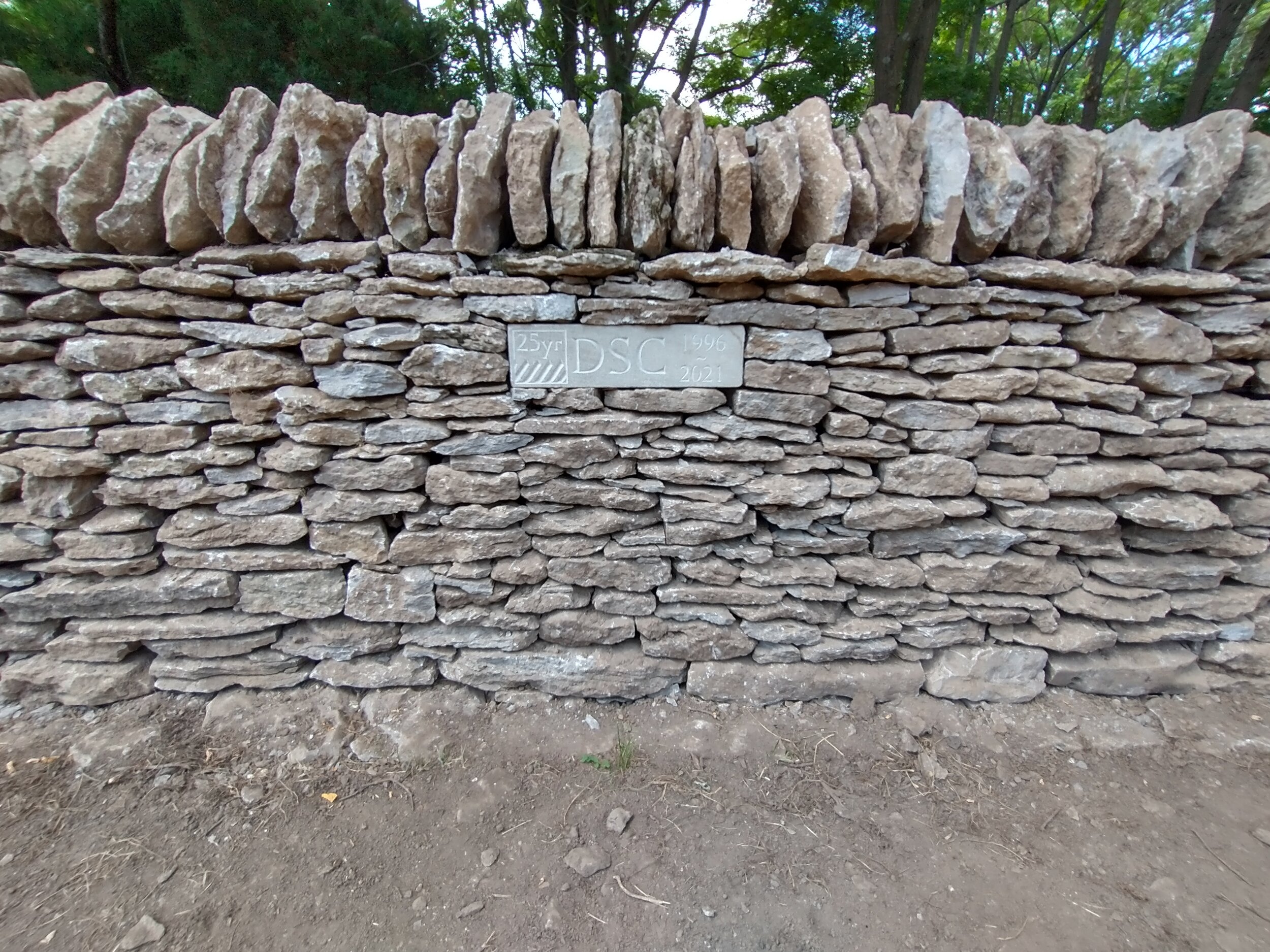
The mission of the non-profit Dry Stone Conservancy is to preserve historic dry stone structures and to revive and promote the ancient craft of dry-laid masonry. The Dry Stone Conservancy works with local, state, and federal government entities to achieve that mission. Contributions to the Dry Stone Conservancy go directly toward that mission and are fully tax-deductible. Donate now to make a difference today!
2024 Spring Workshop Schedule

Fall 2023 Workshop and Certification Schedule
2022 Fall Workshop and Events Schedule!
Photos:

Millennium Farms 2023

Paris Pike Historic Rock Fence Repair 2020

13th National Dry Stone Walling Competition
September 28, 2019

Grand Teton National Park
Jenny Lake Renewal Project - Ribbon Cutting - July 2019

Spring 2019 Workshops

2019 Fall Workshops

Carmel of Jesus, Mary, and Joseph

Tallgrass Prairie National Preserve 2018
Looking for a DSC Certified Dry Stone Mason? You can find our updated referral list of dry stone masons HERE!
The mission of the nonprofit Dry Stone Conservancy is to preserve existing drystone structures, and to promote the ancient craft of dry-laid stone masonry.